• WORLD
    • AFRICA
    • ASIA
    • EUROPE
    • NORTH AMERICA
    • SOUTH AMERICA
    • OCEANIA
  • NATURE
    • Animals
    • Water
    • Earth
  • HISTORY
  • CULTURE
    • MUSIC
  • PEOPLE
    • Politics
    • LIFESTYLE
      • Leisure
    • BUSINESS
  • SPORTS
Listing The BEST
keep your memories alive
Home – Archives for 2022 – Archives for June
Monthly Archives

June 2022

Interesting FACTSNATUREWater

TOP 10 Deepest Places in the World

by ListingTheBest June 30, 2022
written by ListingTheBest

The oceans and seas that surround the continents contain many wonders, many of which humans have yet to discover. There are valleys, plains, mountains, and trenches in the vast bodies of water that cover more than 70% of the planet’s surface and hold approximately 1.35 billion cubic kilometers of water.

The underwater formations are massive in comparison to those on land because the mountains in the ocean basin are higher than those on land, and the plains are flatter, the ocean trenches are much deeper.

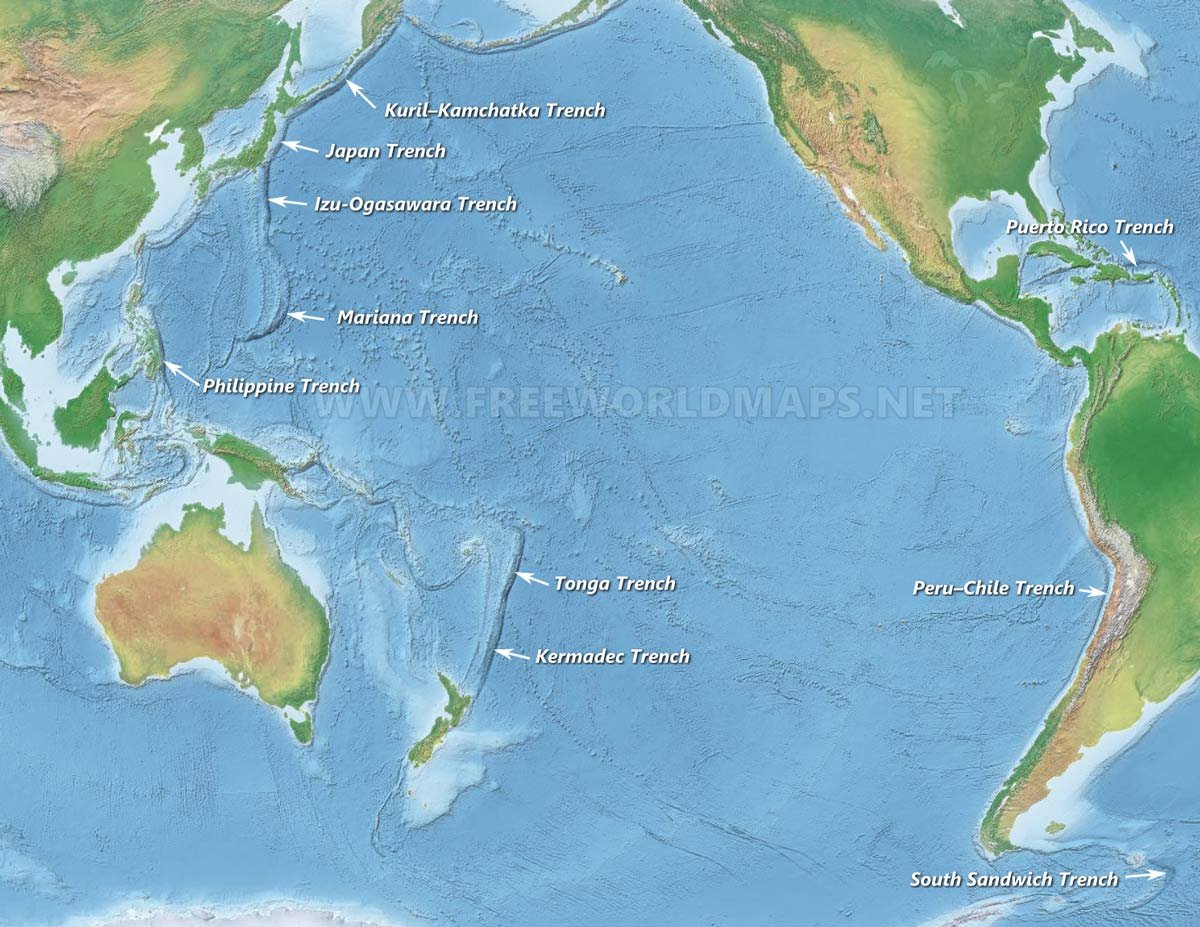
1. Mariana Trench

In the western Pacific Ocean, the Marina Trench is the deepest part of the Earth’s surface. It is home to the Earth’s deepest point, known as the Challenger Deep. While many people have climbed Mount Everest, only two have descended the Challenger Deep.

In 1960, Jacques Piccard and Don Walsh descended to a depth of 10,916 meters.

The trench, which appears as a crescent-shaped scar in the Earth’s crust, is approximately 2,550 km long, 69 km wide on average, and has a maximum depth of 10.91 km at the Challenger Deep. At the same time, other efforts determined the deepest portion to be 11.034 km. The deep stretches for hundreds of kilometers southwest, towards the US island of Guam.

2. Tonga Trench

The Tonga Trench is located in the southwest Pacific Ocean, near the northern end of the Kermadec Tonga Subduction Zone. It is approximately 10.882 kilometers below sea level. The Horizon Deep, the deepest point in the Tonga trench, is the second deepest point on Earth after the Challenger Deep and the deepest trench in the Southern Hemisphere.

3. Philippine Trench

The Galathea Depth in the Philippine trench is 10.54 km below sea level, making it the world’s third deepest point. This submarine trench, also known as the Mindanao Trench, is located in the Philippine Sea and spans 1,320 kilometers in length and 30 kilometers in width in the east of the Philippines.

This trench, prominent among others in the Philippine Sea, was formed by a collision between the Eurasian plate and the smaller Philippine plate. The Manila Trench, East Luzon Trench, Negros Trench, Sulu Trench, and Cotabato Trench are among the other significant trenches in the Philippine Sea.

4. Kuril- Kamchatka Trench

This trench is another deep part of the Pacific Ocean that lies at a significant depth of 10.5 km below sea level. This trench, located near Kuril Island and off the coast of Kamchatka, is responsible for many oceanic bed volcanic activities in the region.

The trench was formed as a result of the late Cretaceous subduction zone that created the Kuril and Kamchatka volcanic arcs.

5. Kermadec Trench

Another submarine trench can be found on the South Pacific Ocean floor. The Kermadec Trench is about 1,000 kilometers long, stretching between the Louisville Seamount Chain and the Hikurangi Plateau.

The Kermadec Trench, formed by the subduction of the Pacific plate beneath the Indo-Australian Plate, has a maximum depth of 10.04 km.

6. Izu-Ogasawara Trench

The Izu-Ogasawara Trench is located in the western Pacific Ocean and has a maximum depth of 9.78km. This deep trench, also known as the Izu-Bonin Trench, extends from Japan to the northern section of the Mariana Trench and is an extension of the Japan Trench. Aside from the Izu-Ogasawara Trench, the western Pacific Ocean is home to the Izu and Bonin Trench.

7. Japan Trench

The Japan trench (shown above), another deep submarine trench east of the Japanese islands, is part of the Pacific Ring of Fire in the northern Pacific Ocean. The Japan trench stretches from the Kuril Islands to the Bonin Islands and has a maximum depth of 9 km. It is also the northern and southern extension of the Kuril-Kamchatka Trench and the Izu-Ogasawara Trench, respectively.
The trench was formed when the oceanic Pacific plate subducted beneath the continental Okhotsk Plate. And the tsunamis and earthquakes cause the subduction zone to move with the Japan Trench.

8. Puerto Rico Trench

The Puerto Rico trench, located between the Caribbean Sea and the Atlantic Ocean, is the deepest point in this region and the eighth deepest point on the planet’s surface.

It is located at a depth of 8.64 km, is visible at Milwaukee Deep, and spans over 800 kilometers; this trench has been responsible for many tragic tsunamis and earthquake activities in this region.

9. South Sandwich Trench

South Sandwich Trench, the deepest trench in the Atlantic Ocean after the Puerto Rico Trench, is described as Meteor Deep and runs for over 956 kilometers, making it one of the most visible trenches in the world.
This trench, located in the southern Atlantic Ocean 100 kilometers east of the South Sandwich Islands, was formed by the subduction of the South American Plate’s southernmost portion beneath the small South Sandwich Plate. An active volcanic arc is also associated with the South Sandwich Trench.

10. Peru–Chile Trench

The Peru-Chile Trench (Atacama Trench) is located in the eastern Pacific Ocean about 160 kilometers off the coasts of Peru and Chile. The maximum depth of the Atacama Trench is 8.06 km below sea level. The trench’s deepest point is known as Richards Deep.
The trench is approximately 5,900 kilometers long and 64 kilometers wide on average, covering an area of approximately 590,000 square kilometers. The Atacama Trench was formed by the convergence of the subducting Nazca and South American Plates.

June 30, 2022 0 comments
0 FacebookTwitterPinterestEmail
Putin Killer
HistoricalHISTORYPolitics

TOP 15 Leaders Responsible For The Genocides

by ListingTheBest June 29, 2022
written by ListingTheBest

15. Josip Broz Tito

TOP 15 Leaders Responsible For The Genocides - Listing The BEST

Tito was responsible for countless ethnic cleansing, including mass killings of the German population after World War II, despite receiving numerous honors from other nations.


14. Saddam Hussein

TOP 15 Leaders Responsible For The Genocides - Listing The BEST

Saddam Hussein, the fifth president of Iraq, was a prominent figure in the revolutionary Arab Socialist Ba’ath Party and the Ba’ath Party of Baghdad. He was also well-known across the world for the brutality of his rule.


13. Jean Kambanda

TOP 15 Leaders Responsible For The Genocides - Listing The BEST

This Rwandan tyrant, who first entered a guilty plea to several counts of genocide, then accused the army of “pushing him to do it.”


12. Leonid Brezhnev

TOP 15 Leaders Responsible For The Genocides - Listing The BEST

This Soviet leader was in charge of the extermination of around 100,000 Moldovans. He also participated in purges against Volga Germans, Greeks, Cossacks, Armenians, and Poles.


11. Yakubu Gowon

TOP 15 Leaders Responsible For The Genocides - Listing The BEST

Due to his military blockades, this Nigerian warlord was able to starve tens of thousands of his own people.


10. Michel Macombero

TOP 15 Leaders Responsible For The Genocides - Listing The BEST

A member of the Tutsi ethnic group, Michel Micombero, carried out an ethnic cleansing program that resulted in the death of hundreds of thousands of Hutus long before the terrible Rwandan Genocide of the 1990s. Mass executions would be carried out once more 40 years later, this time by the Hutu majority.


9. Kim Il-Sung

TOP 15 Leaders Responsible For The Genocides - Listing The BEST

Kim succeeded in establishing one of the most oppressive and genocidal governments in history, setting the standard for his successors.


8. Pol Pot

TOP 15 Leaders Responsible For The Genocides - Listing The BEST

Pol Pot, a long-time leader of the Khmer Rouge in Cambodia, ruled his nation under a communist dictatorship and enacted a radical brand of agricultural socialism. Over 25% of Cambodia’s population died during his reign as a result of hunger, execution, forced labor, and subpar healthcare.


7. Ismail Enver

TOP 15 Leaders Responsible For The Genocides - Listing The BEST

Numerous Armenians, Germans, Greeks, and Assyrians perished at the hands of this Ottoman military leader who oversaw the Young Turk Revolution in 1908, and he was also regarded as the main planner of several other terrible genocides.


6. Adolf Hitler

TOP 15 Leaders Responsible For The Genocides - Listing The BEST

Hitler is almost synonymous with the term “genocide,” and he was in charge of one of the most organized and grotesquely successful genocides in history.


5. Jozef Stalin

TOP 15 Leaders Responsible For The Genocides - Listing The BEST

The total number of deaths from all of his detention camps, purges, and mass executions reached tens of millions.


4. Leopold II of Belgium

TOP 15 Leaders Responsible For The Genocides - Listing The BEST

This Belgian King founded the Congo Free State for his own personal gain, disobeying the guidelines imposed by colonial powers of Europe. It remains one of the cruelest and most imperialist regimes in human history today. Over 15 million Congolese were exploited and killed as a result of it.


3. Augusto Pinochet

TOP 15 Leaders Responsible For The Genocides - Listing The BEST

Major Western political leaders refused to call him a homicidal madman despite his terrible sociopathic inclinations. They praised his reforms instead. Today, however, we can clearly see how mistaken the political elites of the West were and how ruthless his reign of terror was.


2. Mao Ze Dong

TOP 15 Leaders Responsible For The Genocides - Listing The BEST

Mao Ze Dong, commonly known as Chairman Mao, was a Chinese communist revolutionary and the man credited with starting the People’s Republic of China. His rule in China and Tibet resulted in the deaths of 40–70 million people as a result of executions, forced labor, and hunger, according to historians.


X1. vladimir putin

TOP 15 Leaders Responsible For The Genocides - Listing The BEST

Vladimir Putin is still killing. He is already responsible for many deaths, rapes, and tortures and he still killing and ordering to kill. New days monster is still alive.

June 29, 2022 2 comments
0 FacebookTwitterPinterestEmail
Planet Earth. Love, Kindness.
EarthWORLD

20 incredible facts about the Earth

by ListingTheBest June 24, 2022
written by ListingTheBest

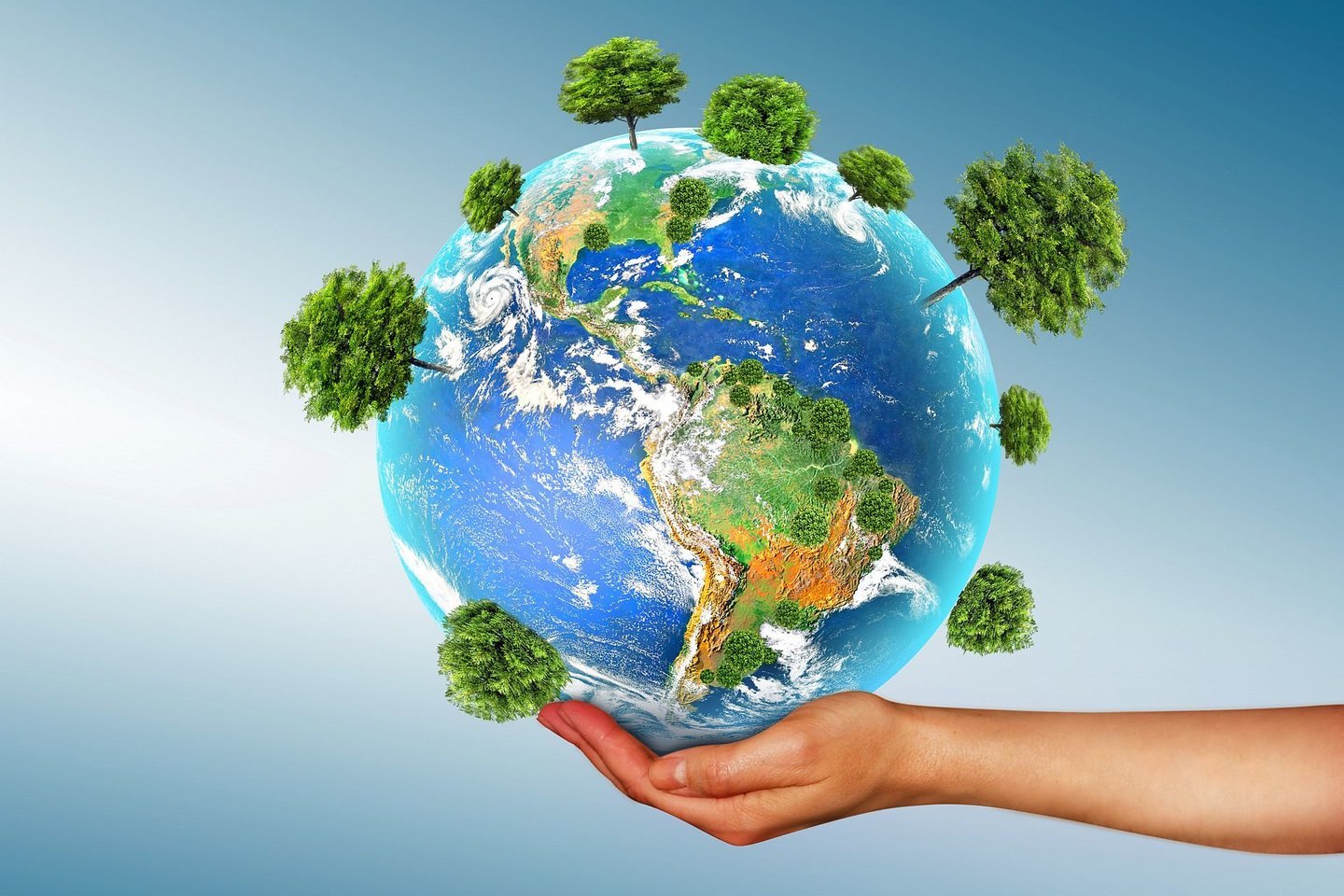
You will probably agree that the Earth is a wonderful planet. It’s amazing not only because it’s the only planet teeming with life so far – but also because of how little is known about it. Well, at least most of us do. Because scientists keep discovering this and that new thing – and we are left to wonder and enjoy such news.

1. Earth’s core

is as hot as the Sun’s surface Paul Asimov, a geochemist at the California Institute of Geology, says that within a certain margin, the temperature of our Earth’s core is similar to the temperature of the Sun’s surface, which is about 5,500 degrees Celsius.

2. The Earth is radioactive

During a study conducted in 2011, it became clear that the Earth generates a total of about 40 terawatts of heat energy – and half of this energy is generated by the decay of radioactive materials in the planet’s core. Scientists have measured particles called antineutrinos that come from the Earth’s core – and discovered that half of the heat energy the Earth generates comes from the decay of certain radioactive elements

3. Life below the ocean floor

Life below the ocean floor Victoria Orphan, a geobiologist at the California Institute of Geology, says that the sediments in Earth’s oceans are home to 2.9 x 1029 microorganisms that live 2.5 kilometers below the ocean floor. Much of this deep-sea biosphere grows extremely slowly compared to the outside world – cells are estimated to divide only every 10-1000 years. Scientists are finding more new sources of microbial life below the ocean floor than ever before. Scientists recently revealed that they have discovered traces of bacteria in rocks 120 meters below the sea floor – significantly deeper than ever before.

4. Moss is everywhere

U.S. Geological Survey ecologist Sasha Reed says mosses live on surface soils in deserts around the world. Interestingly, mosses can take water directly from the air using adapted structures resembling small hairs that stick out from the leaves, called chaff. For this reason, mosses can survive even in dry areas.

5. “Earthquake weather” is a myth

Seismologist Dr. Lucy Jones says that every culture has its idea of “earthquake weather” which it uses to rationalize its belief that the weather can foretell an earthquake. Scientist says that earthquakes happen below the earth’s surface and are part of a continuous process – so they have nothing to do with the weather.

6. By 2100, the sea level may rise by 75 centimeters

Climate scientist Tapio Schneider says global sea levels could rise by around 60 centimeters by the end of this century. A sea level rise of 30 to 60 centimeters is a serious threat to low-lying islands, narrow and shallow beaches, and marine ecosystems.

7. Clouds help regulate the planet’s temperature

T. Schneider also says that if we poured all the water in the clouds onto the Earth’s surface, a layer of water no thicker than a hair’s thickness would form. But it’s this amount of water that makes the difference between a cool day and a muggy day – and a sunny day and a warm one. It is also important for our planet’s climate. Because of clouds, the Earth’s average temperature is 10 degrees lower than it would be without them. T. Schneider says that the number of clouds will determine how climate change will continue to develop. Climate computer models do not provide an answer to this question, as it is extremely difficult to simulate clouds and the amount of water they contain. For this reason, scientists are developing more accurate simulations that can better predict climate change.

8. The earth is 10,000 times older than humans

Jeremiah P. Ostriker of Princeton University says that the age of planet Earth is about 4.5 billion years. Homo sapiens, meanwhile, arose about 450,000 years ago, which is only about 1/10,000 of the age of the Earth. And people spread around the world only 45,000 years ago.

9. We do not know who named the Earth Earth

There is no historical record of a person giving our planet the name Earth, unlike other planets. It is the only planet not named after a Greek or Roman god.

10. Earth is a heat engine

Andy Ingersoll, a scientist at the California Institute of Geology, says the Earth is a huge heat engine. The heat from the Sun is absorbed in warm areas (lowlands and the Earth’s surface), and heat is radiated in the form of infrared rays in cool areas (altitudes and the atmosphere). This heat energy is converted into kinetic energy, which turns into winds and storms.

11. … but an inefficient engine

A. Ingersoll continues that the Earth is not an efficient heat engine. The difference between cool and warm areas is only a few tens of degrees, so the Carnot efficiency is only 10 percent. However, most of this energy is wasted as warm areas radiate energy to cold areas, creating entropy. So, this heat engine is only 1 percent efficient in creating kinetic energy, but it creates more entropy when the winds die down.

12. The famous US 66 highway is longer than the road to the core of the Earth

Seismologist Jennifer Jackson of the California Institute of Geology says the boundary between the Earth’s core and mantle is about 3,000 kilometers below the surface, a little less than the longest road in the United States, called Route 66. This region between the surface and the core, which consists of both solid rock and liquid iron-rich metals, is as complex as the Earth’s surface.

13. A magnitude 12 earthquake would split the Earth in half

The already mentioned dr. Jones says there has never been an earthquake stronger than 9.5 on the Richter scale, nor an earthquake larger than the size of California. She says a 13-magnitude earthquake simply wouldn’t be possible — because it would require a tectonic trigger bigger than the Earth itself.

14. Earthquakes can be felt on the other side of the planet

Seismologist Zhongwen Zhan of the California Institute of Geology says that earthquakes can occur about 650 kilometers below the earth’s surface – and can be felt on the other side of planet Earth. In 2013, an earthquake occurred near the Kuril Islands (Japan), at a depth of about 650 kilometers – but it was also felt in Australia.

15. The hole in the ozone layer hasn’t closed yet Scientists discovered the first hole in the ozone layer directly above Antarctica in 1985.

The Montreal Protocol, signed in 1987, was the first United Nations-approved plan to focus on reducing ozone-depleting chlorofluorocarbons.

16. A teaspoon of soil contains a billion bacteria

Biologist Dianne Newman of the Geological Survey of California says one teaspoon of soil contains a billion bacteria, the number of people living in Africa.

17. The earth is not perfectly round

Planet Earth is more like a slightly flattened spheroid. But the Earth is not flat by any means.

18. The days are getting longer

Tides are the tiny difference between the gravitational pull of the Moon and the Sun and the centrifugal forces that point in different directions. Earth’s tides are strongest when the three celestial bodies are in a line, which is the case when the Moon is nearly full and young. At this line, the Earth is being pulled at that time, explains A. Ingersoll. He says the ocean reacts the most, but even hard surfaces are affected by tidal forces. The reaction causes water to flow into the oceans and rocks to move underground, both of which waste kinetic energy. Because of this, the speed of rotation of the globe slows down and the days start getting longer.

19. Earth’s contraction can be seen from space

Groundwater pumping can lead to surface subsidence. The surface settles enough that this process can be seen from space. Scientists use satellites and GPS systems to determine how much the Earth’s surface is settling.

20. There are more viruses on earth than stars

The universe is simply teeming with viruses on Earth. There are about 10 billion different viruses on the planet. And that, according to Katherine J. Wu of National Geographic is 100 million times more than there are stars in the Universe.


Find out more about Earth here
June 24, 2022 0 comments
0 FacebookTwitterPinterestEmail
Pyramids-of-Giza-egypt
AFRICAASIACULTUREEUROPEHISTORYNORTH AMERICAOCEANIASOUTH AMERICATravel

TOP 10: Historical places you must see in your lifetime

by ListingTheBest June 14, 2022
written by ListingTheBest

Here are ten of the biggest and most impressive ideas in human history. See and photograph them before you become history yourself.

No. 10 Taj Mahal, India

in 1983 included in the UNESCO world heritage. This 400-hundred-year-old mausoleum was built by Emperor Shah Jahan to signify his undying love for his favorite wife. This structure is visited by 2 to 4 million visitors per year. The Taj Mahal is a stunning blend of Indian, Persian, and Islamic architecture. Try to get your shot as soon as possible before conservation work begins on the shrine to protect the white marble from erosion caused by polluted air.

No. 9 Angkor Wat, Cambodia

This city was built between 1113 and 1150 by the ruler Suryavarman II. Angkor Temple is primarily a tourist destination. It is the very center of the Khmer Empire, from which the XIII century controlled much of Southeast Asia. The city consisted of approximately 72 temples connected to a common complex. While you’re there, be sure to snap a photo of Ankor Wat reflected in the nearby waters.

No. 8 Tikal, Guatemala

This place is a must-visit when visiting Mexico and South America. The ruins of the city of Tikal are a legacy of the Mayan civilization. This city is the largest and best known. It houses the Mayan pyramid, which is 45 meters high and is best seen up close.

No. 7 Petra, Jordan

Petra was included in the UNESCO World Heritage Site in 1985. The nearly 40-meter-high building, with a surface decorated with icons, attracts tourists from all over the world. Petra, also called al-Kazne (treasury, treasure) was lost after the Crusades for almost five hundred years. Petra was rediscovered in 1812. during the Swiss expedition.

No. 6 Great Wall of China, China

The approximately 8,850-kilometer-long wall was built over 2,000 years. This border stretches across a variety of landscapes – deserts, fields, and mountains. This section of the border, called Simatai, is 120 kilometers from Beijing. It is unique in that an incredibly picturesque landscape opens from Simatai. The fact that this gigantic structure is visible even from space makes it one of the greatest architectural achievements in human history.

No. 5 Colosseum, Italy

The real name of this structure is the Flavian Amphitheater. The Colosseum, located in Rome, the capital of Italy, is probably the most characteristic structure of the Roman Empire. It was intended for all kinds of competitions and matches, as well as gladiator fights to the death. This building is impossible to miss. It has 2,000 years of history. The 50,000-seat ancient venue has withstood several earthquakes, constant floods and time. Conservation of this structure was carried out only once in 1990.

No. 4 Machu Picchu, Peru

Built during the greatness of the Inca Empire, around 1460. The city was built on the slope of Machu Picchu, 2350 m. at an altitude above sea level, by the Urubamba River. This city was never found or destroyed by the Spanish conquistadors. in 2008 it was included in the top 100 endangered places in the world. Large numbers of tourists harm the nature of the city. The city can be photographed while traveling on a four-day mountain trek, which is exhausting and difficult.

No. 3 Acropolis, Greece

The Acropolis was the main center of the ancient Greek capital, Athens. This “Upper City” is where Greeks gather to protest against the country’s economic bankruptcy. This place has witnessed 7000 years of human civilization. Most places in Athens are spectacular in their views, but the shot with the ancient temples and altars is the best.

No. 2 Temple Mount, Israel

This place has been an eternal dispute between the believers of Islam and Judaism for thousands of years. It is the best example of Islamic architecture in the world. The Temple Mount should be on everyone’s list of must-see historical sites regardless of your political or religious beliefs.

No. 1 Pyramids of Giza, Egypt

TOP 10: Historical places you must see in your lifetime - Listing The BEST

More than 3000 years have passed. since the beginning of the construction of the pyramids, but until now it is not known how they were built. If you can only visit one place from our list, it should be this place. It is the progenitor of all the wonders of the world. Until 1300 it was the tallest structure on the planet. The home of the Great Sphinx and the entire Giza Valley is an amazing place.


source askmen.com
June 14, 2022 0 comments
0 FacebookTwitterPinterestEmail

Recent Posts

  • Albania Travel Costs 2026: Is It Still a Budget Paradise?
  • 10 Facts About Giorgio Armani
  • Who Will Be the Next Pope? Top 10 Cardinals to Become the Next Pope
  • Most Famous Assassinations In History (TOP 10)
  • Most Powerful Rulers Of All Time – TOP 10

Recent Comments

  1. Richest People In History – Top 10 - Listing The BEST on TOP 15 Leaders Responsible For The Genocides
  2. Most Influential Revolutions In History – Top 10 - Listing The BEST 😱 on Biggest Naval Battles In History – Top 10
  3. The Most Hated Politicians in the World in 2024 on TOP 15 Leaders Responsible For The Genocides
  4. Silver Moon on 16 most important UX design Principles
  5. Blue Sky on The World’s Top 10 Highest Paid Goalkeepers

Recent Comments

  • Richest People In History – Top 10 - Listing The BEST on TOP 15 Leaders Responsible For The Genocides
  • Most Influential Revolutions In History – Top 10 - Listing The BEST 😱 on Biggest Naval Battles In History – Top 10
  • The Most Hated Politicians in the World in 2024 on TOP 15 Leaders Responsible For The Genocides
  • Silver Moon on 16 most important UX design Principles
  • Blue Sky on The World’s Top 10 Highest Paid Goalkeepers

Categories

  • AFRICA
  • Animals
  • ASIA
  • BUSINESS
  • CULTURE
  • Earth
  • ENTERTAINMENT
  • EUROPE
  • Funny
  • GEOGRAPHY
  • Historical
  • HISTORY
  • Interesting FACTS
  • Leisure
  • LIFESTYLE
  • LIST
  • MUSIC
  • NATURE
  • NORTH AMERICA
  • OCEANIA
  • PEOPLE
  • Plants
  • Politics
  • POLL
  • QUIZ
  • Ranked list
  • SCIENCE & TECHNOLOGY
  • SOUTH AMERICA
  • SPORTS
  • Travel
  • Water
  • WEB
  • WORLD

Disclaimer

The information contained on the Service is for general information purposes
only.

The Company assumes no responsibility for errors or omissions in the contents
of the Service.

Full Disclaimer

  • Facebook
  • Twitter

@2021 - All Right Reserved. Designed and Developed by PenciDesign


Back To Top
We use cookies on our website to give you the most relevant experience by remembering your preferences and repeat visits. By clicking “Accept All”, you consent to the use of ALL the cookies. However, you may visit "Cookie Settings" to provide a controlled consent.
Cookie SettingsAccept All
Manage consent

Privacy Overview

This website uses cookies to improve your experience while you navigate through the website. Out of these, the cookies that are categorized as necessary are stored on your browser as they are essential for the working of basic functionalities of the website. We also use third-party cookies that help us analyze and understand how you use this website. These cookies will be stored in your browser only with your consent. You also have the option to opt-out of these cookies. But opting out of some of these cookies may affect your browsing experience.
Necessary
Always Enabled
Necessary cookies are absolutely essential for the website to function properly. These cookies ensure basic functionalities and security features of the website, anonymously.
CookieDurationDescription
cookielawinfo-checkbox-analytics11 monthsThis cookie is set by GDPR Cookie Consent plugin. The cookie is used to store the user consent for the cookies in the category "Analytics".
cookielawinfo-checkbox-functional11 monthsThe cookie is set by GDPR cookie consent to record the user consent for the cookies in the category "Functional".
cookielawinfo-checkbox-necessary11 monthsThis cookie is set by GDPR Cookie Consent plugin. The cookies is used to store the user consent for the cookies in the category "Necessary".
cookielawinfo-checkbox-others11 monthsThis cookie is set by GDPR Cookie Consent plugin. The cookie is used to store the user consent for the cookies in the category "Other.
cookielawinfo-checkbox-performance11 monthsThis cookie is set by GDPR Cookie Consent plugin. The cookie is used to store the user consent for the cookies in the category "Performance".
viewed_cookie_policy11 monthsThe cookie is set by the GDPR Cookie Consent plugin and is used to store whether or not user has consented to the use of cookies. It does not store any personal data.
Functional
Functional cookies help to perform certain functionalities like sharing the content of the website on social media platforms, collect feedbacks, and other third-party features.
Performance
Performance cookies are used to understand and analyze the key performance indexes of the website which helps in delivering a better user experience for the visitors.
Analytics
Analytical cookies are used to understand how visitors interact with the website. These cookies help provide information on metrics the number of visitors, bounce rate, traffic source, etc.
Advertisement
Advertisement cookies are used to provide visitors with relevant ads and marketing campaigns. These cookies track visitors across websites and collect information to provide customized ads.
Others
Other uncategorized cookies are those that are being analyzed and have not been classified into a category as yet.
SAVE & ACCEPT
Listing The BEST
  • WORLD
    • AFRICA
    • ASIA
    • EUROPE
    • NORTH AMERICA
    • SOUTH AMERICA
    • OCEANIA
  • NATURE
    • Animals
    • Water
    • Earth
  • HISTORY
  • CULTURE
    • MUSIC
  • PEOPLE
    • Politics
    • LIFESTYLE
      • Leisure
    • BUSINESS
  • SPORTS